Rooftop safety
How to clean solar panels safely without climbing on the roof
Solar panels are best rinsed from the ground with a fan spray in the cool of morning or evening — never walk on the panels, and never use a concentrated jet on the glass. Here's the method that keeps you safe and your panels intact.
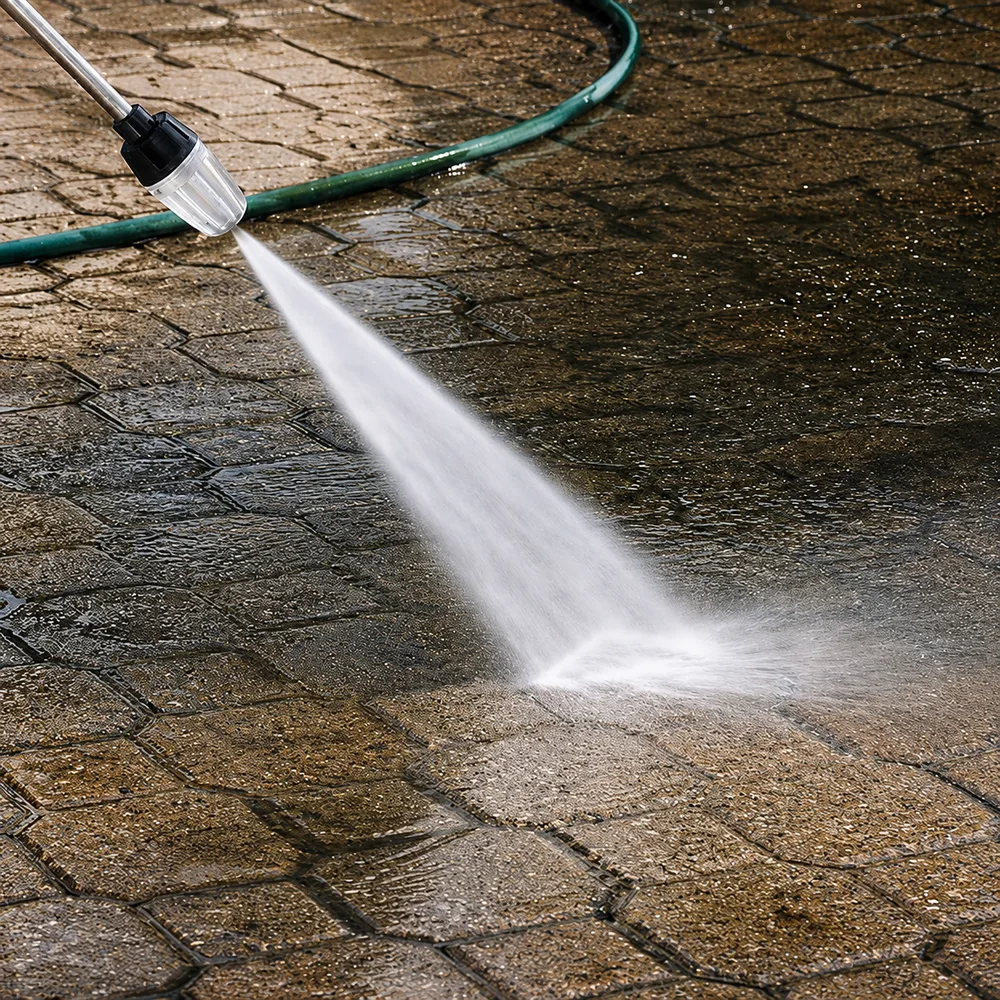
Why panel cleaning goes wrong
Most solar panel damage and most solar panel injuries happen for the same reason: someone climbs onto the roof. Panels are slippery when wet, the frames flex underfoot, and a cracked cell can quietly cut your system's output for years without an obvious sign. The good news is that dust, pollen and light bird mess rinse off easily from the ground — you rarely need to be up there at all.
Ground rule
If you can't reach every panel comfortably from the ground or a stable single-storey position, stop and call a solar cleaning professional. No panel is worth a fall.
What you'll need
- A garden hose with a fan-spray nozzle (a TurboJet on its wide fan setting works well, kept on a gentle, sweeping motion)
- Soft-bristle brush on a long telescopic pole, only for reachable ground-mount arrays
- A cool, still morning or early evening — never midday
- A helper to hold the hose steady if you're working from a single-storey eave
The safe method, step by step
- Check the panels are cool to touch. Never spray water on hot glass in direct sun — the thermal shock can crack a panel that's otherwise fine.
- Stand at ground level or on a stable single-storey verandah, never on a ladder leant against guttering.
- Switch to the fan spray head and hold the nozzle at a slight downward angle, roughly 1-2 metres back from the panel surface.
- Work in horizontal passes from the top of the array down, letting gravity carry the dirt off the lower edge.
- Rinse the frame edges and any junction boxes lightly — avoid direct, close-range spraying into cable entry points.
- Let panels air-dry. Don't wipe wet glass with a cloth; grit trapped in the fabric can scratch the anti-reflective coating.
Timing and settings
| Factor | Recommendation |
|---|---|
| Time of day | Early morning or early evening, panels cool |
| Nozzle setting | Fan spray only, never the concentrated jet |
| Distance | 1-2 metres from the glass |
| Frequency | Every 2-3 months, or after dust storms/bird activity |
| Rooftop access | Avoid — clean from the ground wherever possible |
Mistakes to avoid
- Never walk on panels, even ones marketed as walkable — the risk to you and to warranty isn't worth it
- Never use the concentrated jet setting close to glass or into frame gaps
- Never spray cold water on hot panels or hot water on cold panels
- Don't use detergents unless the panel manufacturer specifically allows it — plain water is usually enough
- Don't ignore a sudden drop in output after a storm — that's a job for an electrician or solar installer, not a hose
How long it takes
A typical 6-10kW residential array takes about 20-30 minutes to rinse from the ground, including setup and pack-down. Ground-mount arrays with a soft brush on a pole take a little longer, closer to 40 minutes, because you can afford to be more thorough on panels you can safely reach.
When to call a professional
If your roof pitch is steep, your array is on a second storey, or you're seeing caked-on grime rather than everyday dust, a licensed solar cleaning service has the harness gear and soft-water systems to do the job without risk. For everything else — routine dust, pollen, light bird droppings — a hose and a fan spray from the ground will keep your panels performing well.
Questions
Frequently asked
Ready to blast years of grime off your place?
Free Australia-wide shipping, 30-day money-back guarantee, and prices from A$47.99 per unit.
Claim my TurboJet