Green & black growth
How to remove mould and algae from outdoor surfaces
Mould and algae need time to loosen, not just pressure — apply a safe cleaner, let it dwell, then rinse in two passes for the best result on render, paths, fences and shaded walls. Rushing straight to the hose barely touches embedded growth.
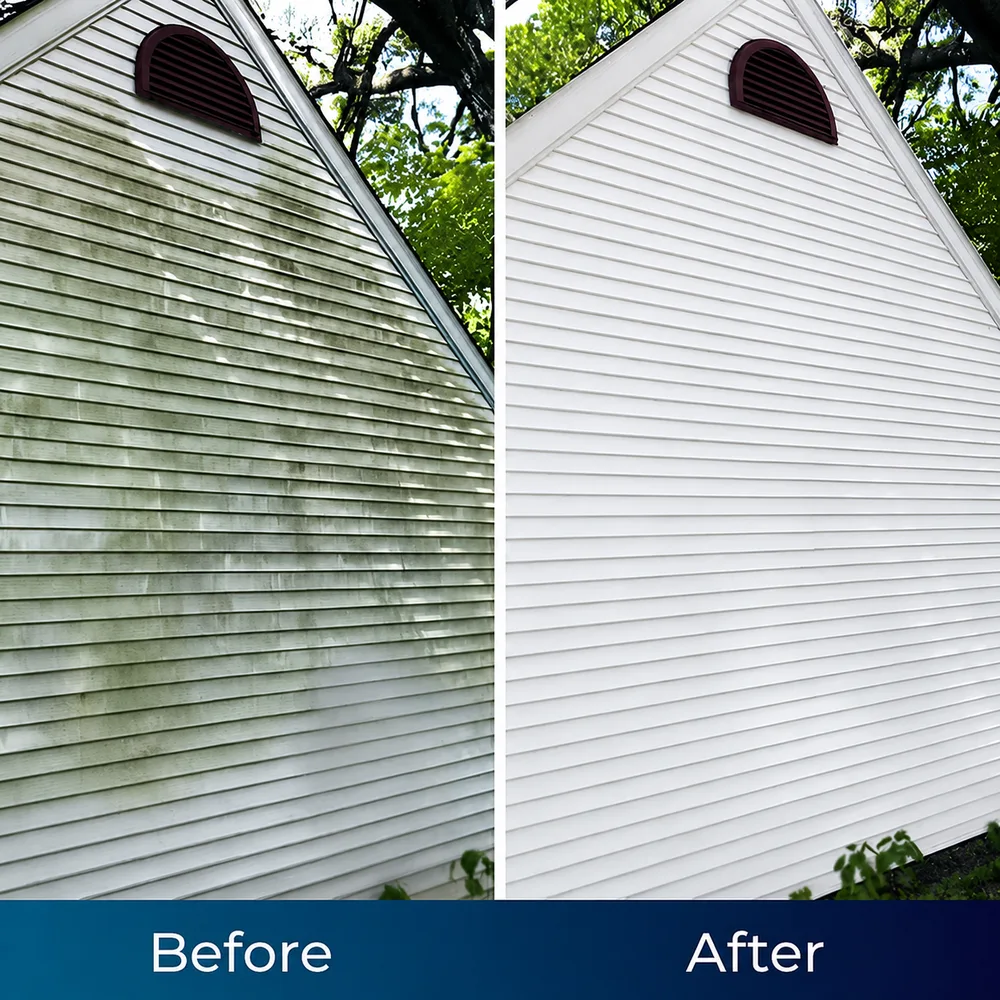
Why mould and algae are stubborn
Green algae and black mould both root into the microscopic texture of render, concrete and timber, particularly in shaded, damp spots that don't get much sun. Blasting water straight onto it might strip the surface layer, but the roots often survive and the growth returns within weeks. Dwell time with a cleaning solution is what actually breaks it down before rinsing.
Safe cleaners to use
- A diluted outdoor mould and mildew cleaner from the hardware store, used per the label instructions
- A simple oxygen-bleach based cleaner, which is generally gentler on render and timber than chlorine bleach
- Always test a small, hidden patch first, especially on painted render, coloured pavers, or treated timber
- Wear gloves and eye protection, and keep pets and children off the area until it's fully rinsed
The two-pass method
- First pass — pre-rinse: hose down the affected area with a fan spray to remove loose dirt, cobwebs and surface debris.
- Apply your chosen cleaner evenly, working from the bottom up on vertical surfaces to avoid streaking.
- Let it dwell for the time stated on the product label — usually 10-15 minutes — don't let it dry out completely.
- Second pass — rinse: use the fan spray for render, timber and painted surfaces, and the concentrated jet only on bare concrete, pavers or masonry that can handle it.
- Work top to bottom in overlapping strips so you don't leave a patchy, half-cleaned look.
- Check the shaded, worst-affected spots again once dry — a light second treatment may be needed on heavy black mould.
Settings by surface
| Surface | Nozzle | Notes |
|---|---|---|
| Painted render | Fan spray only | Concentrated jet can strip paint |
| Bare concrete/pavers | Concentrated jet | Good for ground-in green algae |
| Timber fencing | Fan spray | Jet can splinter or gouge soft timber |
| Colorbond/metal fencing | Fan spray | Avoid close-range jet on painted coating |
Humid-climate maintenance schedule
In humid coastal or subtropical parts of Australia — think Queensland and northern NSW — shaded render and fences can regrow algae within two to three months. A light rinse-only maintenance pass every six to eight weeks, with a full cleaner treatment twice a year, keeps growth from taking hold again. Drier inland and southern climates can usually stretch to a full treatment once or twice a year.
Mistakes to avoid
- Skipping dwell time and rinsing the cleaner off immediately — it needs time to work
- Using the concentrated jet on soft render or old timber, which can gouge or strip the surface
- Mixing different cleaning chemicals together — always use one product and rinse thoroughly before applying another
- Ignoring water runoff near garden beds — check the product label for plant safety before spraying near lawns and garden beds
How long it takes
A single shaded wall or a 10-metre fence line typically takes 45-60 minutes including dwell time. A full path or driveway edge with heavy green algae can take 1.5-2 hours, mostly because of the waiting period between application and rinse.
Questions
Frequently asked
Ready to blast years of grime off your place?
Free Australia-wide shipping, 30-day money-back guarantee, and prices from A$47.99 per unit.
Claim my TurboJet