Cleaning guide
Cleaning patios, pavers and decking without wrecking them
Outdoor entertaining areas cop both extremes: mould in the shaded corners and baked-on dust everywhere else. Both come off easily — provided you match the spray head to the surface instead of using one setting for the whole yard.
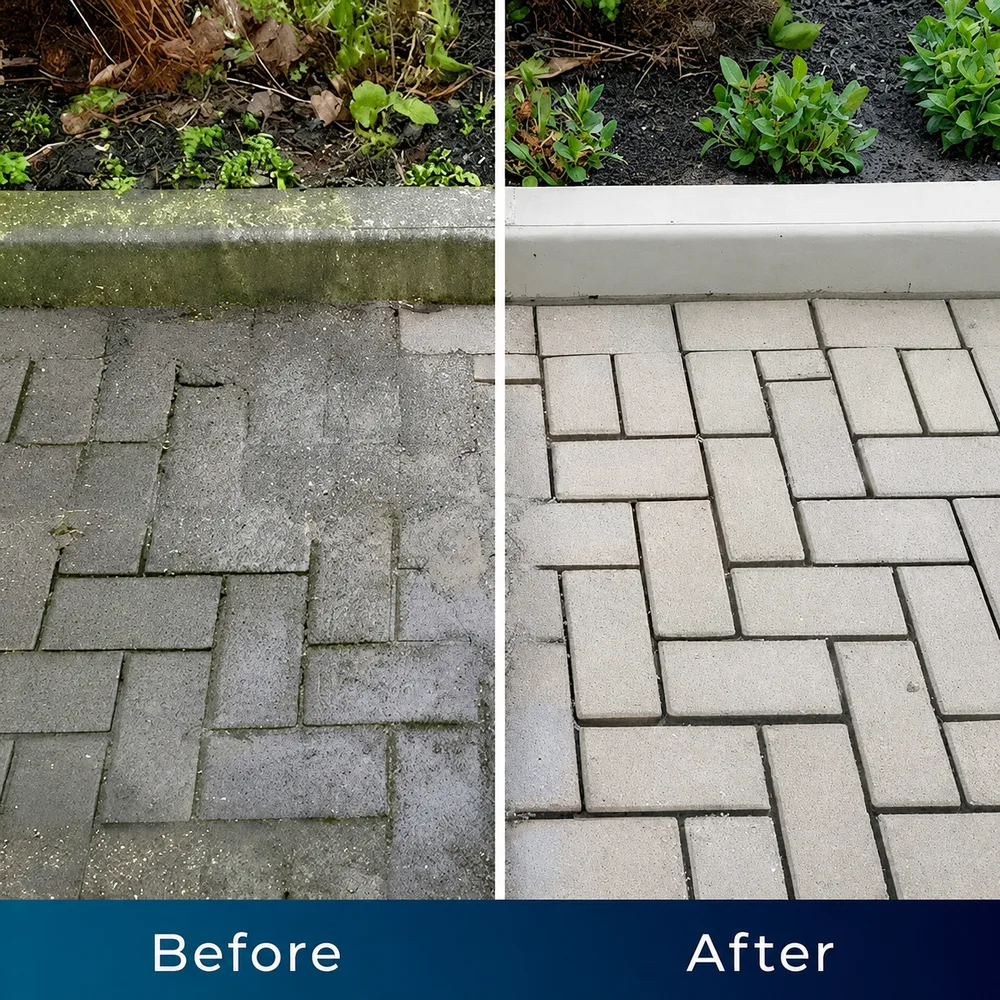
Work out what surface you actually have
Australian outdoor areas are rarely one material. A typical backyard has concrete pavers near the door, tiles around the pool, timber or composite decking off the living room, and a rendered or Colorbond wall behind it all. Each of those has a different tolerance for a concentrated jet, and the fastest way to ruin an afternoon is to treat sealed travertine like a concrete path.
| Surface | Head | Distance | Note |
|---|---|---|---|
| Concrete and clay pavers | Jet | 15cm | Angle along joints to lift moss |
| Exposed aggregate | Jet then fan | 15–20cm | Check for loose stones first |
| Sealed or polished tiles | Fan | 30cm+ | Close jetting can mark the sealer |
| Travertine and limestone | Fan | 30cm+ | Soft stone etches easily |
| Hardwood decking | Fan, with the grain | 30–40cm | Test a hidden board first |
| Softwood / treated pine | Fan, keep moving | 40cm | Furrs up if you linger |
| Composite decking | Fan | 30cm | Follow the board manufacturer's guidance |
| Shade sails and screens | Fan | 50cm+ | Support the fabric from behind if it flexes |
Pavers, tiles and pool surrounds
- Sweep, then move the furniture right out of the area rather than shuffling it around.
- Wet the whole area with the fan head and let it sit two minutes so the biological film softens.
- Switch to the jet and run along the joints at a shallow angle first — that is where the moss lives.
- Clean the paver faces in overlapping strips, working away from the pool or door so grime flows outward.
- On sealed or polished tiles, stay on the fan head at 30cm so you don't mark the sealer.
- Rinse everything downhill, then top up joint sand if a lot came out.
Pool surrounds deserve a note of their own: the film that makes coping slippery is biological, and it regrows in exactly the same shaded spots. A quick fan rinse every few weeks is far more effective than an annual deep clean, and it keeps the area safe underfoot for kids over summer.
Timber decking, where restraint pays
Timber is the one surface where the wide fan head is not a compromise — it is the correct tool. Stay 30–40cm back, keep the nozzle moving, and always follow the direction of the grain. Test a hidden board near a wall first. Never hold a concentrated jet on one spot: softwoods furr up almost instantly and the raised grain will stay rough until you sand it.
If your deck is oiled, expect to re-oil after any deep clean. That is true of every wash method, not something specific to a jet nozzle, and it is a good moment to do it — clean, dry timber takes oil far more evenly than a grey, filmed board.
Mould, mildew and that slippery film
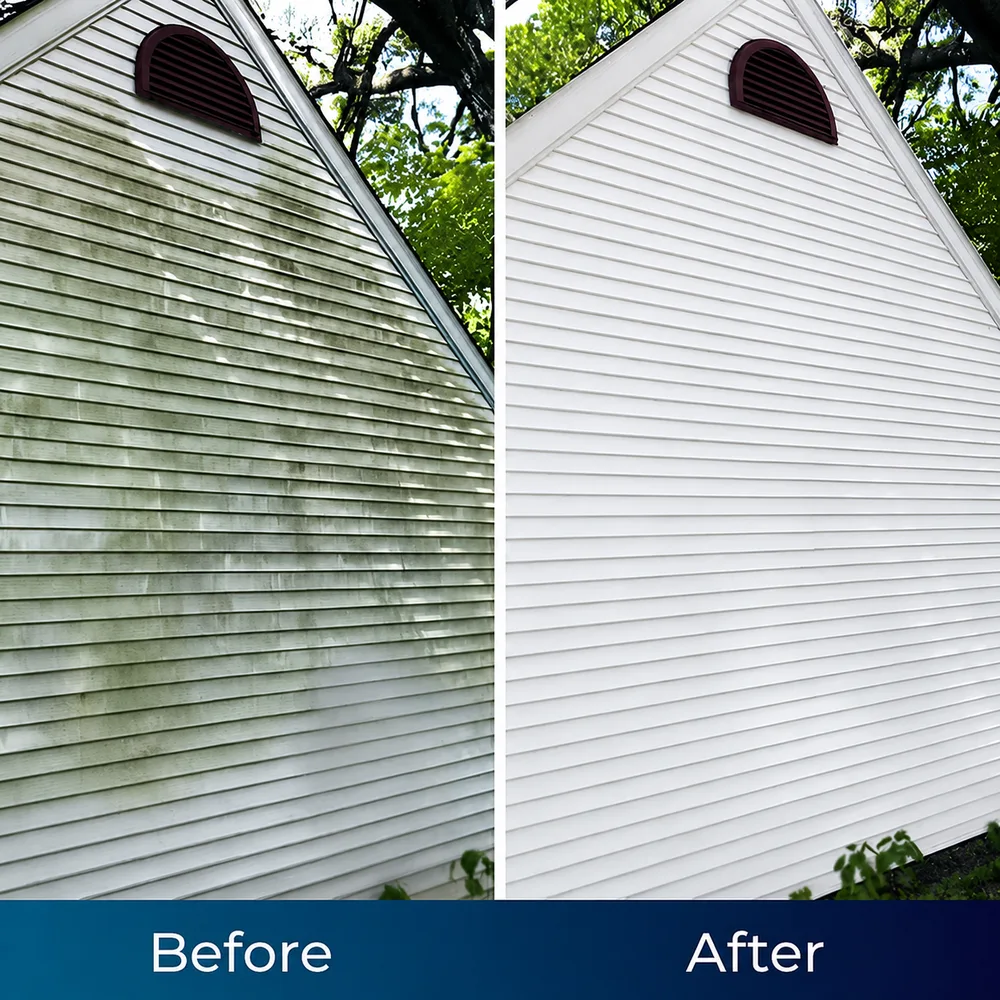
Shaded areas near gardens, fences and pools grow a biological film that turns surfaces slippery long before they look dirty. The routine that works is rinse, wait two minutes, then jet. Two gentle passes give a far more even result than one aggressive pass, and because the spores sit in joints and grain, the second pass is what stops it returning within weeks.
Outdoor furniture, umbrellas and screens
- Fan head, comfortable distance, always top down so you don't re-dirty finished sections.
- Mesh and sling furniture rinses in seconds — support the fabric from behind if it flexes badly.
- Umbrellas and shade sails: open them fully, rinse from a distance, and let them dry open to prevent mould.
- Glass balustrades: fan head only, then squeegee, or you will spend longer chasing water spots than cleaning.
- Cushions and covers come off first — they hold water for days.
A realistic weekend plan
Do walls and pergola first, then furniture, then the ground. Cleaning the ground first and the wall second guarantees you clean the ground twice. For a typical suburban entertaining area — a patio, a small deck and a furniture setting — allow around an hour, most of which is moving things and waiting for dwell time rather than actual spraying.
Buying from us
What every order includes
30-day money-back guarantee
Not impressed? Send it back for a full refund.
Free shipping Australia-wide
Dispatched from our Australian warehouse.
Secure payment
256-bit SSL encrypted checkout, powered by Stripe.
Real human support
Australian-hours email support, 7 days a week.
Questions
Frequently asked
Ready to blast years of grime off your place?
Free Australia-wide shipping, 30-day money-back guarantee, and prices from A$47.99 per unit.
Claim my TurboJet