Comparison hub
TurboJet compared with the alternatives
Before you spend anything, work out whether a hose-powered nozzle is the right tool for your jobs. These comparisons are deliberately honest — where a petrol or electric washer wins, we say so.
Choose your comparison
TurboJet vs a pressure washer
Cost, weight, setup and results.
vs an electric pressure washer
Where mains power genuinely wins.
vs an ordinary hose nozzle
Why concentrating flow matters.
vs paying a cleaner
What is safely DIY, what is not.
TurboJet vs TurboJetOZ
Similar names, separate businesses.
Water use and restrictions
Cleaning without wasting water.
The short version
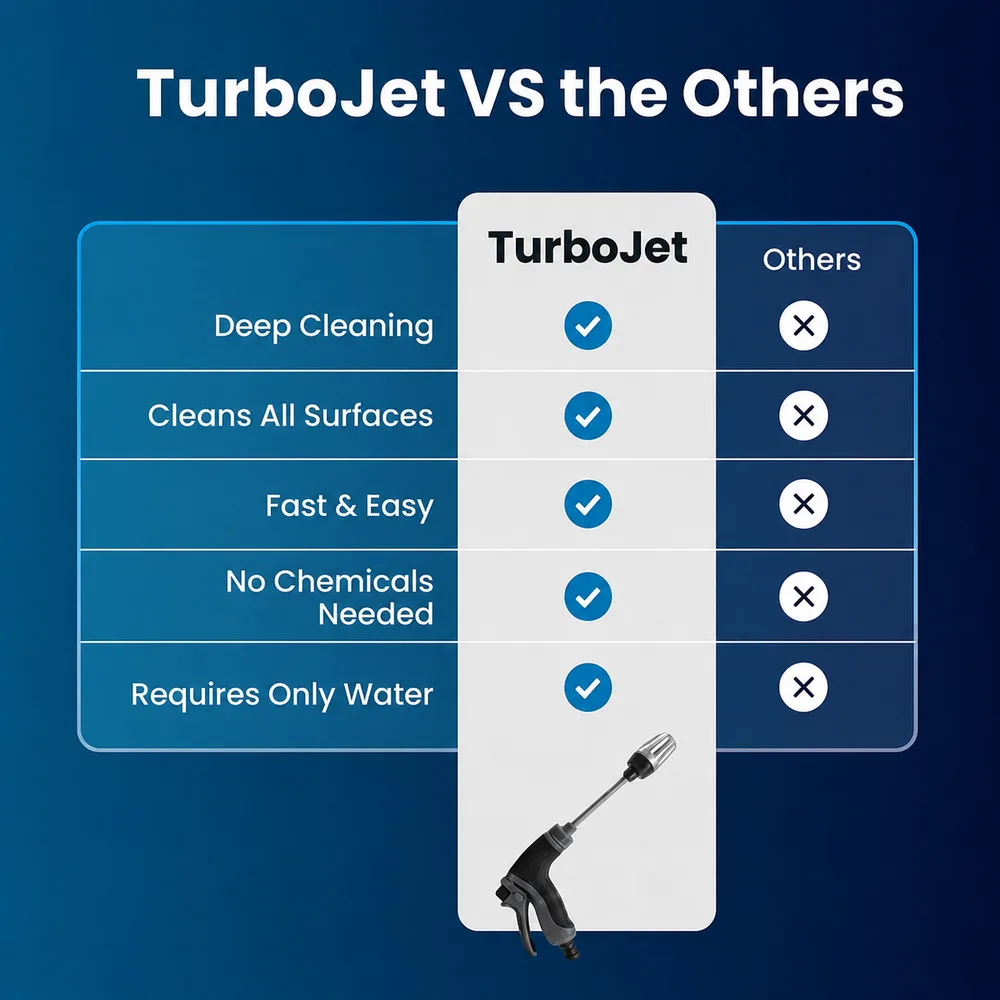
TurboJet vs an ordinary nozzle
| Feature | TurboJet | Ordinary nozzle |
|---|---|---|
| Removes even the toughest stains | ||
| Powerful high-pressure jet | ||
| Connects in 8 seconds | ||
| Works on every surface | ||
| No chemicals needed | ||
| Uses less water per job | ||
| No electricity or petrol | ||
| Costs under A$80 |
How to choose in 30 seconds
- Regular household grime — driveways, pavers, cars, fences, furniture, bins, windows: TurboJet does these comfortably from your existing tap.
- Heavy, ingrained commercial work — paint stripping, oil-soaked workshop floors, whole-house render restoration: buy or hire a petrol or electric pressure washer.
- No outdoor power point, renting, or storage is tight: a nozzle is the only practical option, and it lives in a drawer.
- Anything at height or on a roof: hire a professional. No nozzle makes ladder work safe.
A note on fairness
We sell TurboJet, so treat every comparison here as an interested opinion and check the claims against your own jobs. We only compare on things that can be verified about our own product: the price in Australian dollars, what fits, what it cleans and the guarantee that comes with it.
Match the tool to the job, not to the marketing
Every cleaning tool is a trade-off between power, convenience and cost, and the most common buying mistake in Australia is optimising for the first one only. A machine that cleans harder but needs unpacking, a power point and twenty minutes of setup gets used a few times a year. A nozzle that lives in a drawer and connects in about eight seconds gets used most weekends. Over a year, the second option leaves a cleaner property even though the first one wins on paper.
The three questions worth answering first
- What exactly is on the surface? Algae, traffic film and dust are surface contamination and come off with concentrated water. Paint, rust and soaked-in oil are stains, and no amount of pressure alone removes them cleanly — they need a chemical step.
- How often will you clean? Shaded driveways and coastal walls need a rinse every few weeks, which favours a tool with zero setup. An annual deep clean favours hiring something powerful for one weekend.
- Where is the job? A back fence, a driveway away from the house or a rural shed often has water but no power. That single fact rules out electric washers entirely.
What we will not claim
No hose attachment exceeds the pressure your mains water supplies, and none matches a 2000+ PSI pump. If a listing claims otherwise, it is overselling. What a well-made concentrating nozzle does is put the flow you already pay for into a much smaller aperture, which is enough for the overwhelming majority of suburban cleaning jobs.
Where each option lands
- Ordinary spread nozzle: rinsing only — it wets grime rather than lifting it.
- Concentrating hose nozzle: regular driveway, paver, wall, car, bin, gutter and furniture cleaning.
- Electric pressure washer: heavier annual jobs where a power point is available.
- Petrol pressure washer: large areas, commercial work, no power access, higher noise and servicing.
- Professional cleaner: roofs, heights, and anything you cannot reach from the ground safely.
FAQ
Comparison questions we get asked
Ready to blast years of grime off your place?
Free Australia-wide shipping, 30-day money-back guarantee, and prices from A$47.99 per unit.
Claim my TurboJet