Cleaning guide
How to clean your driveway with a hose-powered nozzle
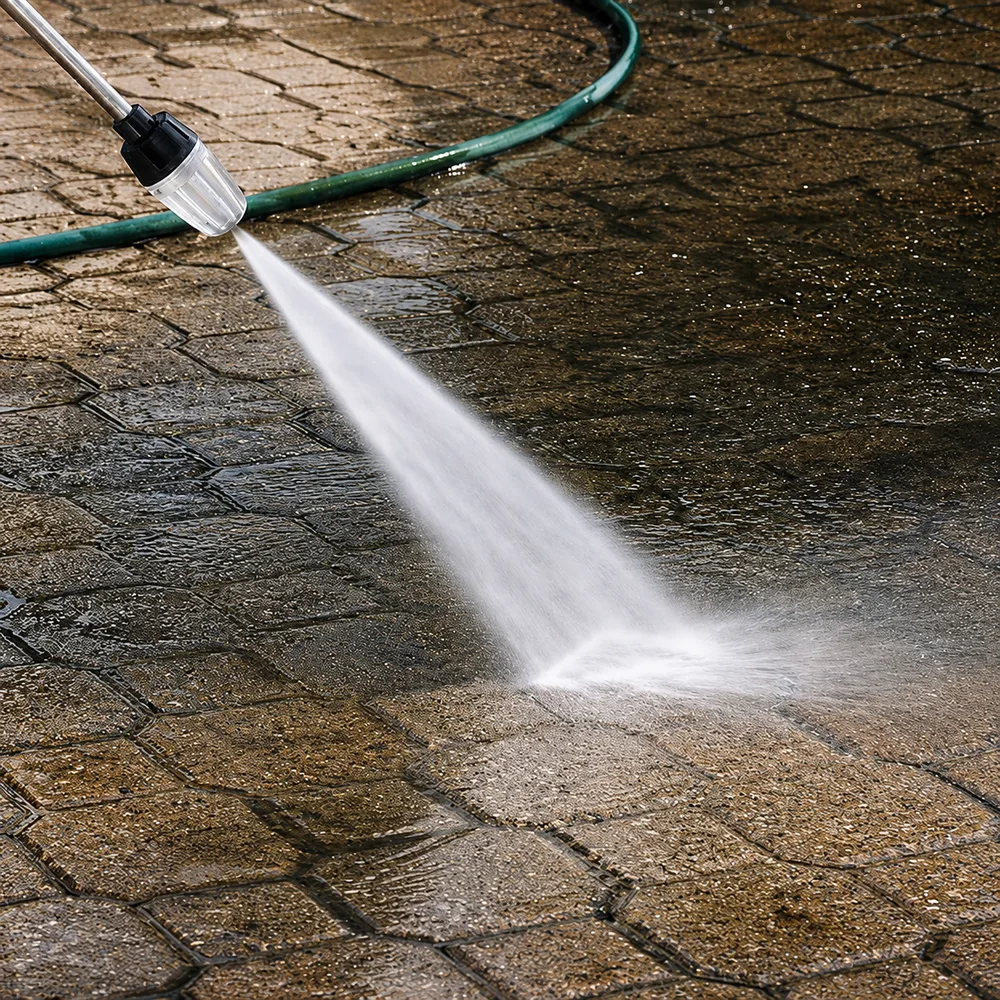
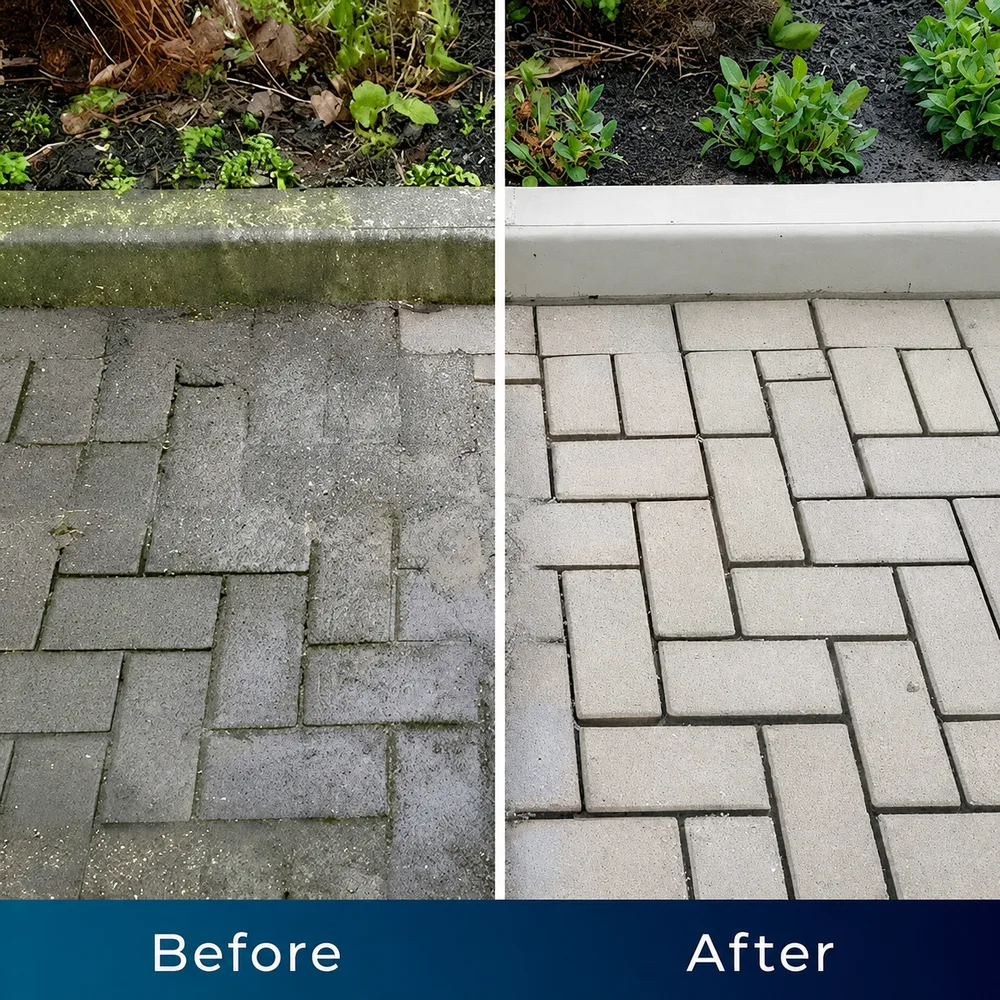
A grey, streaked driveway is usually algae and embedded road grime rather than permanent staining. With a concentrated jet, a sensible pattern and a bit of dwell time, most Australian driveways come back several shades lighter in an afternoon.
What is actually making your driveway grey
Three things darken Australian driveways, and they respond differently. Algae and lichen grow in shade and after rain, and they sit on the surface as a slippery film — this is the easiest to remove and the reason a clean driveway looks dramatically lighter. Traffic film is a mix of tyre rubber, brake dust and road oil that works into the top layer of concrete, and it needs a closer, slower pass. Rust, oil drips and paint are genuine stains that have soaked in; water alone will lighten but not always erase them.
Knowing which one you are looking at saves an hour of frustration. Splash a bucket of water on a dirty section: if the wet patch instantly looks clean and new, it is surface film and a jet will fix it. If the mark stays dark when wet, it is soaked into the concrete and you should plan on a degreaser as well.
What you need before you start
- A garden hose on a standard Australian fitting, with the tap opened fully — flow matters as much as pressure
- A high-pressure nozzle with both a concentrated jet and a wide fan head, so you can switch as the surface changes
- A stiff broom for sweeping loose grit first, and a bucket for pre-wetting
- Eye protection, closed shoes, and a plan for where the dirty water will run
- Optional: a driveway-safe degreaser for oil patches, applied before you jet
Check your local water rules first
Hose use for washing hard surfaces is set by your state water authority and local council, and it changes seasonally. Check the current rules for your area before you start — a concentrated nozzle finishes the job faster, which generally means less total water than dawdling with an open hose.
The method, step by step
- Sweep the whole driveway. Jetting loose gravel just fires it at your car and your shins.
- Connect the nozzle to your hose — hand tight, about eight seconds, no tools — and open the tap fully.
- Pre-wet the entire slab with the fan head. Wet concrete releases grime far more easily than dry concrete, and it stops you leaving a hard edge where you started.
- Wait two minutes. This dwell time is the single most-skipped step and it does more work than extra pressure.
- Switch to the jet head and work in overlapping strips about 400mm wide, top of the slope down, moving at a steady walking pace.
- Hold the jet 10–20cm from concrete and pavers. Closer for stubborn black patches, further back for anything sealed or painted.
- Overlap every strip by a third. Uneven overlap is what causes the zebra-stripe look people complain about.
- Finish by rinsing the whole area with the fan head so the loosened grime leaves with the water rather than drying back onto the slab.
Distances and settings by surface
| Surface | Head | Distance | Watch out for |
|---|---|---|---|
| Plain concrete | Jet | 10–15cm | Older, crumbly concrete — back off if you see sand lifting |
| Exposed aggregate | Jet, then fan rinse | 15–20cm | Loose stones on unsealed or aging aggregate |
| Clay or concrete pavers | Jet at a shallow angle | 15cm | Blowing out joint sand — top it up afterwards |
| Sealed or painted concrete | Fan only | 30cm+ | Lifting the sealer or paint edge |
| Bluestone and natural stone | Fan, jet only on joints | 20–30cm | Etching soft stone with a static jet |
| Asphalt or bitumen | Fan only | 30cm+ | Loosening the binder and pulling out aggregate |
Black stains, oil drips and rust
Black tyre marks at the top of a driveway are usually rubber and oil combined. Apply a degreaser, leave it the time the label states, then jet from about 10cm at a shallow angle so the jet slides under the residue rather than pushing it deeper. Two moderate passes always beat one aggressive pass held in place, which just polishes a lighter halo into the concrete.
Rust from steel furniture, reo bar or bore water is iron oxide inside the pores of the concrete. Water will lighten it; only an oxalic-acid-based rust remover reliably clears it. Do that step first, rinse thoroughly, then clean the rest of the driveway so the whole slab dries to an even colour.
Mistakes that cost people a weekend
- Starting dry. Always pre-wet — it halves the effort and prevents streaking.
- Holding the jet still. Movement is what cleans; a stationary jet etches.
- Cleaning only the dirty half. The clean part will look obviously different, so do the whole slab in one session.
- Working uphill, so dirty water runs back across finished sections.
- Ignoring the joints. On pavers, the joints hold the moss that regrows first.
- Forgetting the garden. Rinse plants with clean water afterwards if you used any degreaser.
How long a clean driveway stays clean
In a sunny, open position, a cleaned driveway usually holds its colour for a season or more. In shade, under trees, or on the south side of a house, algae is back within months because the surface never fully dries. The practical answer is not a harsher clean but a faster one: when the tool lives in a drawer and connects in seconds, a ten-minute rinse every few weeks keeps the slab permanently presentable, which is exactly the routine that a heavy pressure washer in a shed never gets used for.
Side by side
TurboJet vs an ordinary hose nozzle
| Feature | TurboJet | Ordinary nozzle |
|---|---|---|
| Removes even the toughest stains | ||
| Powerful high-pressure jet | ||
| Connects in 8 seconds | ||
| Works on every surface | ||
| No chemicals needed | ||
| Uses less water per job | ||
| No electricity or petrol | ||
| Costs under A$80 |
Buying from us
What every order includes
30-day money-back guarantee
Not impressed? Send it back for a full refund.
Free shipping Australia-wide
Dispatched from our Australian warehouse.
Secure payment
256-bit SSL encrypted checkout, powered by Stripe.
Real human support
Australian-hours email support, 7 days a week.
Questions
Frequently asked
Ready to blast years of grime off your place?
Free Australia-wide shipping, 30-day money-back guarantee, and prices from A$47.99 per unit.
Claim my TurboJet